Day Six, another early start, passports at the ready for our drive northwards through Vermont and our crossing the St Lawrence into Canada for a two night stay in Montreal!
After a couple of hours on the road we made a short comfort stop at a Dunkin' Donuts in Burlington, before a short painless wait at customs as we crossed into Canada and, after an hour or so drive, we had our first sight of Canada's second city Montreal.
The magnificent bilingual city of Montreal Occupies an island at the junction of the St. Lawrence and Ottowa rivers, and although hundreds of miles from the sea, it is a major port.
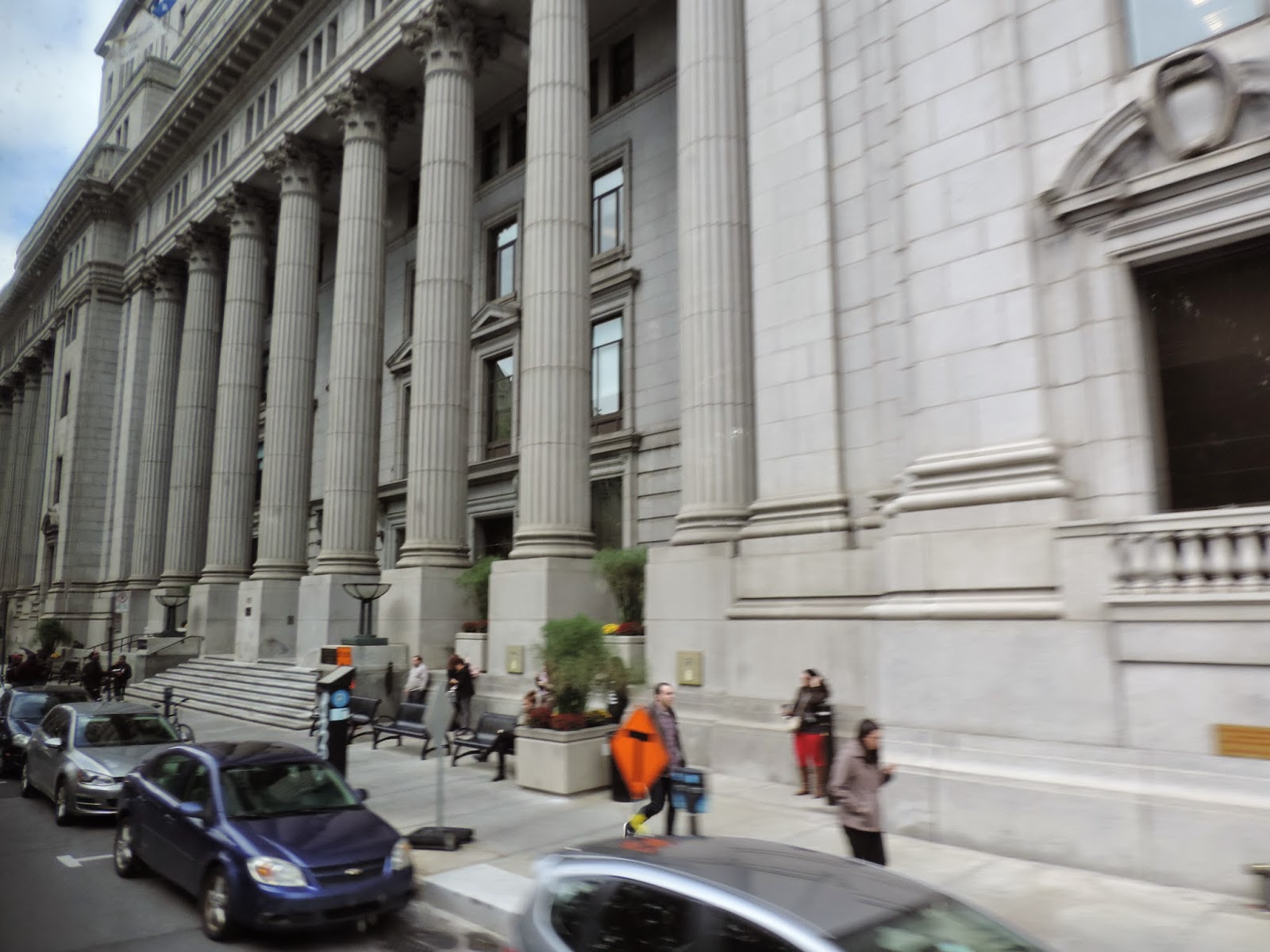
On the way to our hotel we had a tour of the city with our guide pointing out various places of interest, such as The Sun Life Building in Dorchester Square, where Britain's Gold reserves, negotiable securities and Crown Jewels were stored during WW2 for safe keeping.
These were secretly packed in crates labelled 'Fish' and shipped across the Atlantic, arriving at Halifax
on July 1, 1940, they were locked in an underground vault three stories
beneath the Sun Life Building, guarded around the clock by the Royal Canadian Mounted Police. The gold was shipped on to Ottawa.
The extremely secretive UK Security Deposit, operating in the vault, arranged for the sale of Britain's negotiable securities on the New York Stock Exchange
over the next few years to pay for Britain's war expenses. The 5,000
Sun Life employees never knew what was stored away beneath them and not a
single piece of the cargo went missing nor was any information about
the operation ever leaked
.
We passed the
Marie-Rein-Du-Monde Cathedral, which is a one third replica of St. Peter's Basilica in Rome.
We also passed the Queen Elizabeth Hotel, this was where John and Yoko conducted their Bed-In between May 26 and June 2 1969, and recorded 'Give Peace A Chance' in room 1742.
Another interesting site is the French Metro entrance, the only one in Montreal, on Victoria Square opposite the statue of Queen Victoria.
It is one of Hector Guimard's art nouveau entrance porticos from the Paris Metro. One of the few authentic installations on a metro station outside Paris, it was given in 1967 by the RATP (Régie autonome des transports parisiens) to commemorate the
collaboration of French and Canadian engineers in building the metro.
Our next stop was
Place d'Armes, a square in the old quarter of Montreal. In the centre of the square there is a monument in memory of Paul de Chomnedey (February 15, 1612 – September 9, 1676), a French military officer and the founder of Montreal in New France
and
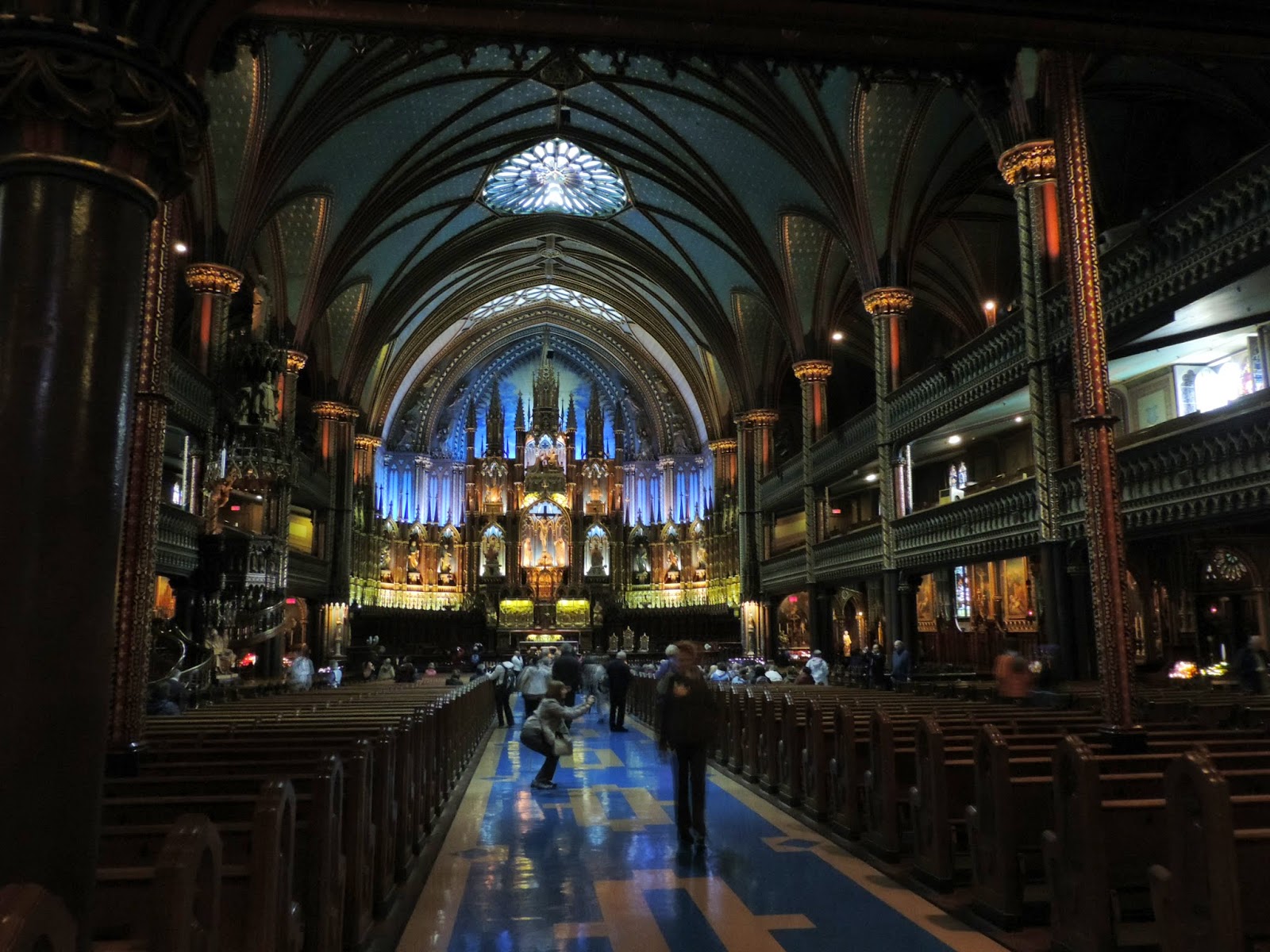
Notre-Dame Basilica. In 1657, the Roman Catholic Sulpician Order
arrived in
Ville-Marie, now known as Montreal; six years later the seigneury
of the island was vested in them. They ruled until 1840. The parish
they founded was dedicated to the Holy Name of Mary, and the parish church of Notre-Dame
was built on the site in 1672. A beautiful building from the outside
but, oh my, when you get inside it literally just takes your breath away!
I almost cried when I saw the altar!
Unusual for a church, the stained glass
windows along the walls of the sanctuary do not depict biblical
scenes, but rather scenes from the religious history of Montreal.
Ordered in 1929 to mark the church's centenary celebrations, the windows were designed by Jean-Baptiste Lagace, which were then brought to life at Francis Chigot's workshop in Limoges, France.
Carrying on with our tour we spied
Nelson's Column!
Erected in 1809 at Place Jacques-Cartier and dedicated to the memory of Admiral Horatio Nelson following his death at the Battle of Trafalgar it is the city's oldest monument.
Other interesting architecture is
Habitat 67, a model community and housing complex designed by Israeli-Canadian
architect Moshe Safdie. It was originally conceived as his master's
thesis in architecture at McGill University and then built as a pavilion
for Expo 67 the World's Fair 1967.
Our next stop was
Christ Church Anglican Cathedral.
The first Christ Church opened on Notre-Dame Street in
Old Montreal in 1814. The cathedral was destroyed by fire in 1856. The present cathedral was completed in 1859 and consecrated in 1867. In the 1980s, a vast real estate project was undertaken below the cathedral. The project consisted of a 34-floor skyscraper, Tour KPMG built north of the Cathedral, underground parking, and two levels of retail stores
situated beneath the cathedral. For a period in 1987, the Cathedral was
supported on stilts while footings for the underground mall, Promenades Cathedrale were excavated.
We were taken below ground into the malls where we were able to see the fascinating storyboard showing how the cathedral was supported during the excavation. Click on pics to biggify.
Montreal has an underground city of 23 miles!
This sculpture, The Illuminated Crowd, where 65 people of all ages, race, facial expressions and conditions are
depicted on four platforms, illustrates the degradation of the human
race and symbolizes the fragility of the human condition. It is quite 'dark' in places, but fascinating just the same.
Whilst this sculpture, Gardons Le Soleil - Keep the sun in Montreal, immediately lifts your spirits.
Following the exhibition
Chihuly: Utterly Breathtaking, hundreds of people called, wrote and emailed the Montreal Museum of Fine Art to say how much they would like
The sun
to remain in Montreal. Faced with this spontaneous enthusiasm and with
the contribution of the artist, the Museum decided to respond to this
public outpouring by launching an appeal to allow tourists and
Montrealers to make a contribution, according to their means, in order
to help
The sun shine in Montreal all year long.
Back on the coach our last stop before the hotel was
Mount Royal, with it's wonderful views of the city.
The first European to scale the mountain was Jacques Cartier, guided there in 1535 by the people of the village of Hochelga
. He named it in honour of his patron, Francis I of France. He wrote in his journal:
And among these fields is situated and seated the said town of
Hochelaga, near to and adjoining a mountain ... We named this mountain,
Mount Royal.
It is a corruption of the name Mount Royal which gives the city its present day name of Montreal.
We also had a magnificent view of the Olympic Stadium which dominates the skyline
and the Olympic village.
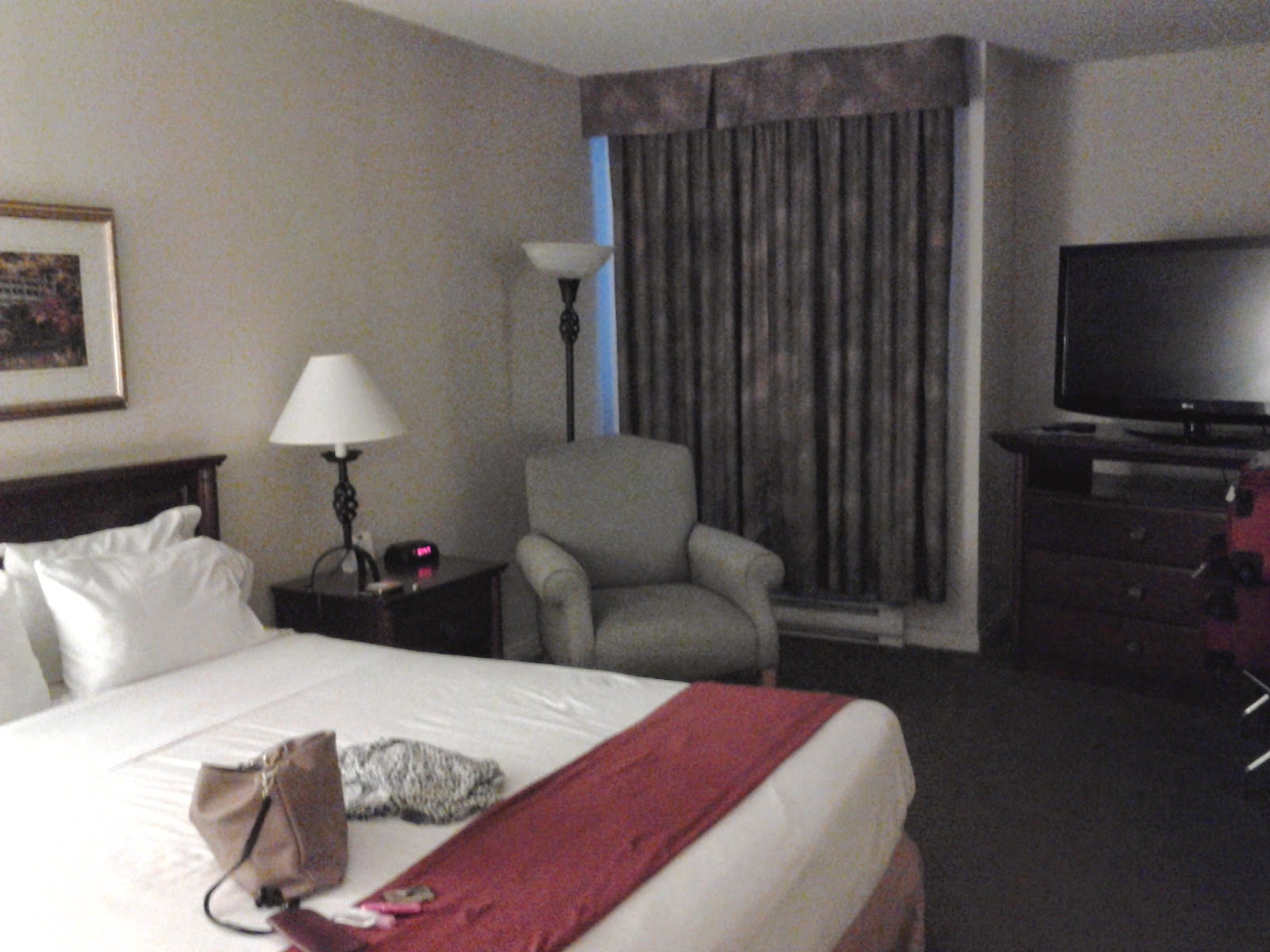
Tour over, we finally arrived at our hotel and were pleasantly surprised to find we had a rather nice suite for the next two nights.
Do you remember how in Boston we were able to meet up with my blog friend Linda
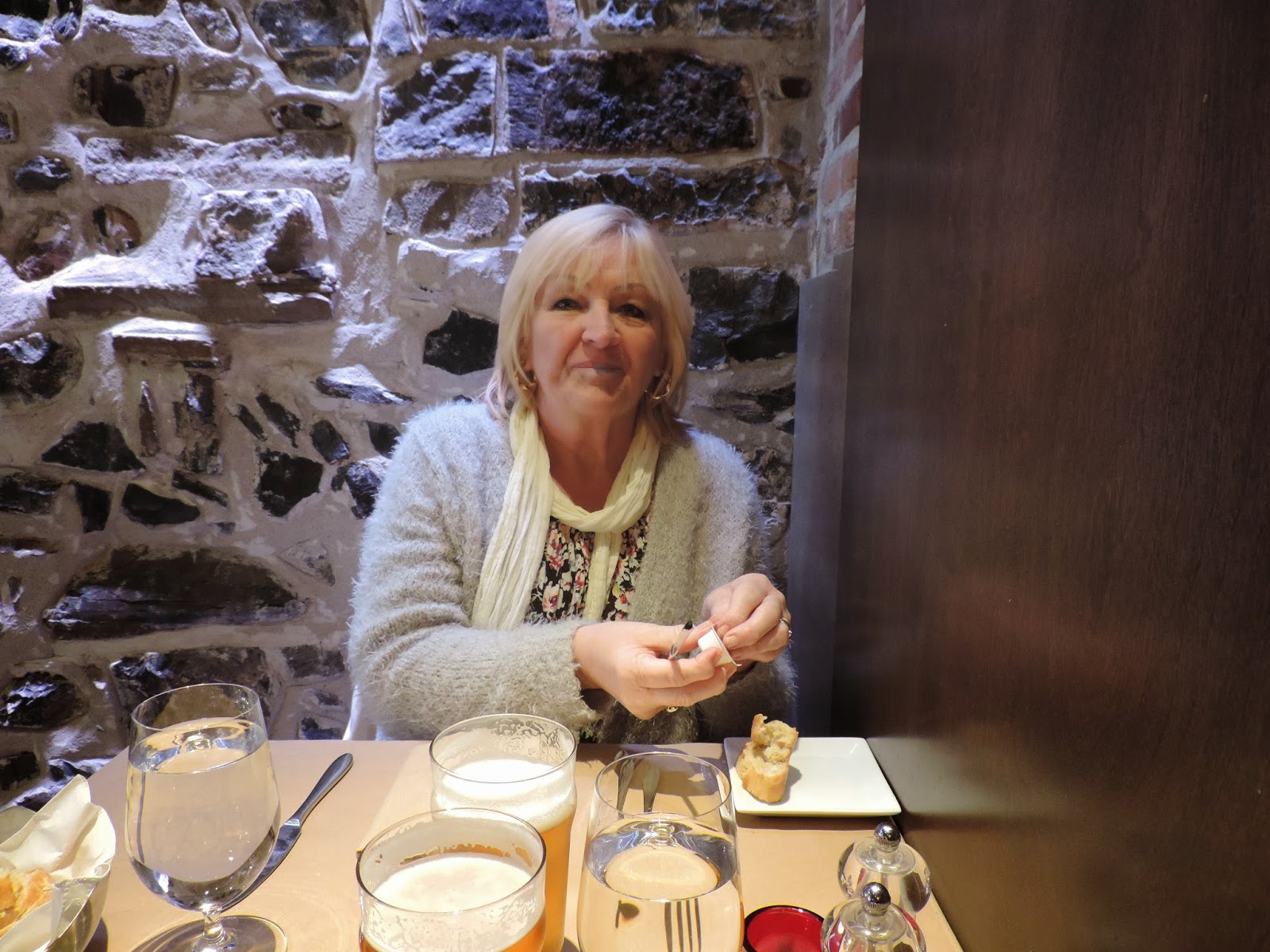
Are We There Yet? Well, after seeing my account and photographs of the meet-up on Facebook another friend I met through blogging, Ann who lives in Montreal, mentioned it was a shame we wouldn't be visiting her city. Well of course we were, so before we arrived we were able to arrange to meet up for dinner on our first evening!
We told Ann where we were staying and she stayed late at work and came to our hotel to meet us. She found us a lovely little French restaurant she'd been to before and we had a great couple of hours enjoying good food and conversation.
Thankyou Ann, it was so good to meet you at long last!
I hope you enjoyed our first day in Montreal and will join me in Part 6 when we visit Quebec for the day.